Product & Catalogue Management
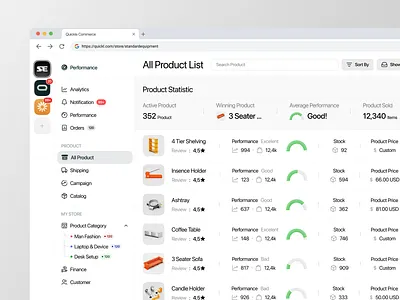
Organise products, categories, descriptions, images, variants and pricing through an agreed administration workflow.

My Tech Professionals develops web-based commerce solutions that help organisations present products or services, manage customer interactions and coordinate online orders. We focus on practical workflows, clear user experiences and maintainable application architecture.
From product catalogues and shopping carts to order administration and payment service integration, each solution is scoped around your business model, operational processes and customer requirements.
Features are selected according to the products or services being sold, the order lifecycle and the requirements of customers and administrators.
Organise products, categories, descriptions, images, variants and pricing through an agreed administration workflow.
Provide a clear cart and checkout journey with order summaries and the required customer information.
Support order review, status updates, fulfilment workflows and customer order information based on business rules.
Connect to selected third-party payment providers where supported, subject to provider onboarding, API access and compliance requirements.
Plan customer registration, sign-in, profile management, order history and related account features where required.
Provide operational views and reports for products, orders and sales data within the agreed application scope.
An e-commerce platform should reflect how your organisation manages products, customers, pricing, stock and fulfilment. We review these processes before proposing features or integrations.
Understand your business model, catalogue, customer journey, operational workflows and project constraints.
Define the site structure, key screens, roles, checkout flow and integration requirements.
Build the agreed storefront, administration features and application services.
Test agreed workflows and integrations, including payment-provider test flows where access is available.
Deploy to the agreed hosting environment and document administration and operational responsibilities.
Plan updates, support and improvements under the agreed maintenance arrangement.
Where the required interfaces and permissions are available, an e-commerce application can be planned to exchange information with other business systems.
Assess integration with inventory, billing or accounting systems to reduce duplicate data entry and support agreed operational processes.
Plan customer and order information flows for enquiry handling, service requests and customer relationship workflows.
Consider courier, delivery tracking, email or SMS services based on provider capabilities and access to approved APIs.
Online commerce applications handle customer, order and sometimes payment-related information. Security and operational responsibilities should be considered from the planning stage and reviewed throughout delivery.
Important: Payment processing should be handled through an appropriate payment provider and its approved integration method. Card data handling, privacy notices, tax settings, refunds, access controls, backups and security responsibilities must be defined for the actual business and deployment. Compliance obligations depend on the business, jurisdiction and selected providers; they should be confirmed with the relevant specialists.
Yes. We can discuss a custom storefront and administration application based on your catalogue, customer journey, order process and required integrations.
Payment integration can be scoped for a selected provider where the business has the required merchant account, credentials and provider approval. Provider fees and onboarding are separate unless stated otherwise in the proposal.
Product, stock and order workflows can be included according to your business rules. Any synchronisation with an existing inventory or accounting system depends on the available interfaces.
Responsive layouts can be developed for common screen sizes. Key customer and administrative workflows should be reviewed on representative devices and browsers during testing.
Cost depends on catalogue size, custom features, integrations, payment and fulfilment requirements, design, hosting and ongoing support. A reliable estimate requires a defined scope.
Share your product or service model, order process and integration needs. Our team can help define a practical development scope and implementation approach.
Discuss Your Requirements